Pickleball Etiquette 101: The Unwritten Rules Every Player Should Know

What Is Pickleball Etiquette?

Pickleball’s official rulebook covers faults, scoring, and the non-volley zone, but it doesn’t cover most of what actually makes open play feel good or awful. That’s the job of etiquette: the unwritten, widely shared code of conduct that governs everything from how you queue up for a court to how you celebrate a winning point.

Because pickleball is played on shared courts, in tight doubles formations, by players who range from first-timers to former college athletes, good etiquette isn’t just politeness, it’s what keeps the game safe, fair, and fun for everyone sharing the facility. As USA Pickleball’s own sportsmanship guidance puts it, skill gets you on the court; etiquette is what keeps you welcome there.

Why Pickleball Etiquette Matters

A little court courtesy goes a long way, especially at a busy club with players of every level sharing the same space:

  • Safety clear communication about stray balls and court crossings prevents collisions and injuries.
  • Fairness honest line calls and score-keeping keep every game legitimate, win or lose.
  • Efficiency orderly paddle rotations mean everyone gets fair, predictable court time.
  • Welcoming culture new players are far more likely to stick with the sport when experienced players are patient and inclusive.
  • Reputation at a club like The Brook, good etiquette is part of what makes open play something people look forward to instead of dread.

Before You Play: Paddle Stacking & Court Rotation

Most open-play sessions run on some version of paddle stacking: arriving players place their paddle on a rack, fence, or line in the order they arrive, and courts fill in that same order as they open up. It’s a simple, self-enforcing queue that avoids arguments about whose turn it is next.

  • Add your paddle to the stack as soon as you arrive, don’t wait until a court opens.
  • Never cut the line, and don’t hold a spot for a friend who isn’t there yet.
  • If you’re playing socially, rotate off after a game or two so others get court time, even if you’re on a winning streak.
  • Learn your facility’s specific system when you visit somewhere new. Some clubs rotate winners; others rotate everyone off after each game.

On-Court Etiquette During Play

Calling the Score

The server calls the full score. Server’s score, receiver’s score, and (in doubles) the server number, out loud before every single serve. This isn’t optional formality; it’s how both teams stay oriented and how disputes get avoided before they start. If you’re not sure of the score, stop and ask rather than guessing.

Line Calls & Faults

Every player calls the lines only on their own side of the net, and only when they’re genuinely certain. Per USA Pickleball’s official sportsmanship guidance, any ball that’s too close to call should be ruled in favor of your opponent. The benefit of the doubt always goes the other way. Players are also expected to call faults on themselves, including foot faults on the serve and non-volley zone violations, the moment they happen, rather than waiting to be caught.

The Kitchen & Net Play

The non-volley zone (“the kitchen”) is where most contested calls happen, since momentum can carry a player across the line after a volley. Be honest about your own foot placement, and if you’re unsure whether you drifted in, call it against yourself. Reaching over the net to play a ball is legal only once the ball has crossed to your side, don’t contact the ball before it does.

Safety Etiquette

With courts often packed tightly together, a few safety habits protect everyone on the facility:

  • Call “ball!” loudly the moment you see a stray ball roll onto another court, so players there can stop safely.
  • If a ball rolls onto your court, make eye contact with the players waiting for it and return it during a break in play, never toss it back mid-rally.
  • Only cross behind an active court when play has stopped; never walk through a point in progress.
  • Never throw or slam a paddle, and never hit a ball in frustration. Both are safety hazards as well as sportsmanship violations.

Sportsmanship & Between-Point Conduct

Good sportsmanship is what separates a competitive match from an unpleasant one:

  • Tap paddles or shake hands at the net after every game, win or lose, and thank your opponents.
  • Skip the trash talk, sarcasm, and exaggerated celebration after an opponent’s unforced error.
  • Don’t coach your partner’s opponents (or your opponents’ partner) uninvited, even with good intentions.
  • If you’re clearly the stronger player, dial back the power rather than overwhelming a less experienced opponent. The goal is a good game for both sides, not a demonstration.
  • Keep language and volume in check; pickleball courts are shared, cross-generational spaces.

Open Play & Mixed-Ability Etiquette

Open play sessions mix players of wildly different experience levels, which makes a bit of extra grace essential:

  • Welcome newer players into games rather than only playing with your regular group.
  • Offer encouragement, not unsolicited coaching, unless someone specifically asks for tips.
  • Keep games moving, clear the court promptly once it’s over so the next group in the stack can start.
  • Match your effort to the game: a casual open-play rally isn’t the place for tournament-level intensity against a beginner.

Quick Reference: Do’s and Don’ts

Keep this cheat sheet in mind next time you’re at the courts:

Situation

Do

Don’t

Arriving for open play

Place your paddle on the rack or line in the order you arrive.

Cut the line or save a spot for a friend who isn’t there yet.

Starting a game

Call out the full score before every serve.

Serve before both players and the score are ready.

Line calls

Call only your own side, and give the benefit of the doubt when unsure.

Call a ball out on your opponent’s side or hesitate to gain an advantage.

A stray ball rolls in

Make eye contact, call out, and wait for a break in play to return it.

Toss the ball back mid-rally or without warning.

After the game

Tap paddles or shake hands and thank your opponents.

Walk off without acknowledging the other side.

Between games

Clear the court promptly so the next group can start.

Linger to chat or run through extra points.


Good Etiquette at The Brook

At The Brook, we want every player, from brand-new beginners to seasoned 4.5s, to feel welcome the moment they walk onto the court. Good etiquette is a two-way street, and we do our part with clear paddle-stacking systems, posted open-play guidelines, and a community that looks out for newer players.

  • New to the sport? Take a complimentary introductory lesson to learn both the rules and the unwritten etiquette before your first open-play session.
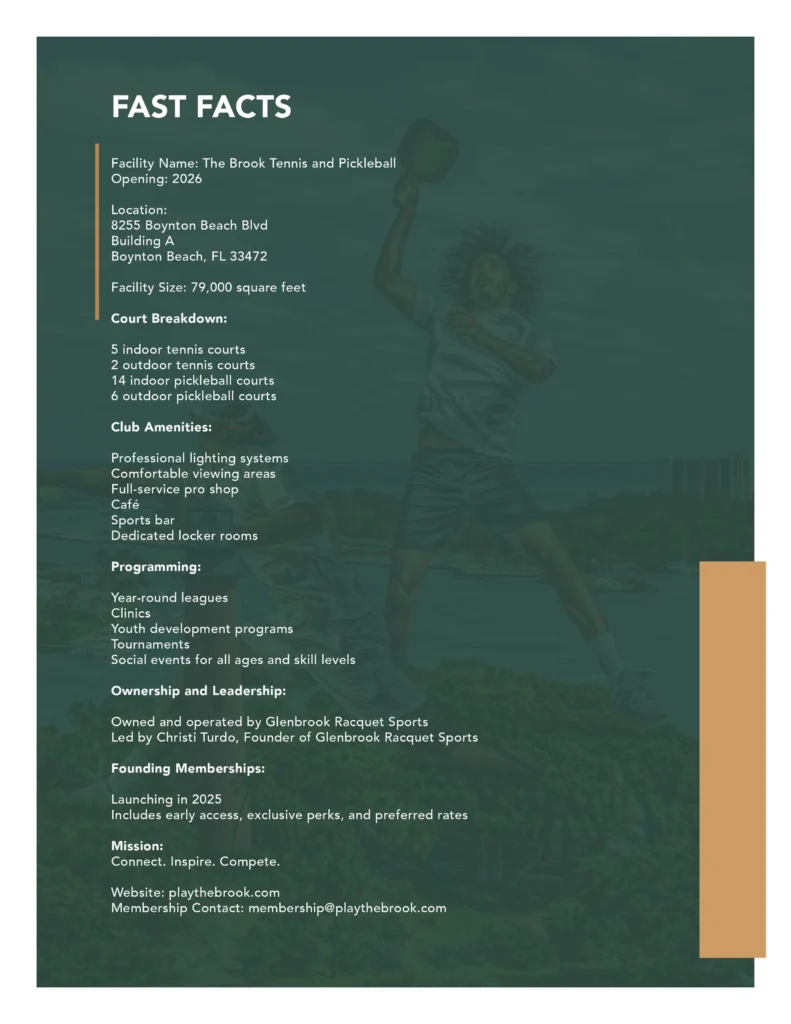
  • Drop into open play on one of our 12 indoor or 3 outdoor courts, where our staff can walk you through our specific paddle-stacking system.
  • Join a clinic or league to practice good court habits alongside players at your level.
  • Questions about how our courts run? Ask our pro shop or front desk team. We’re happy to help you feel at home.

Ready to play? Stop by The Brook in Boynton Beach or reach out to our team to learn more about open play, leagues, and lessons.

Frequently Asked Questions

What is paddle stacking in pickleball?

Paddle stacking is the queueing system most open-play sessions use: players place their paddles on a rack or line in the order they arrive, and courts fill in that same order as they open up.

Who calls the lines in pickleball?

Each player calls the lines only on their own side of the net. If a ball is too close to call with confidence, the call should go in favor of the opponent rather than yourself.

What do you say when a ball rolls onto your court?

Call out loudly, such as “ball!”, so nearby players know to stop safely. If a stray ball rolls onto your court, wait for a break in play, make eye contact with the players waiting for it, and return it, never toss it back mid-rally.

Is it rude to hit hard against a beginner?

Generally, yes. Good etiquette calls for stronger players to moderate their power and shot selection against less experienced opponents so the game stays enjoyable and safe for both sides.

Do you shake hands after a pickleball game?

Yes, tapping paddles or shaking hands at the net after every game, regardless of the outcome, is one of the sport’s most consistent etiquette norms.

YOUR FIRST LESSON IS ON US


As a welcome gift to your HOA community, we are offering every resident a complimentary 15-minute introductory lesson with a professional coach. Fill out the form below and we’ll be in touch. 

Contact Information

Schedule Appointment

Fill out the form below, and we will be in touch shortly.
Contact Information
Single Sport
Multi Sport

Tennis
or
Pickleball

Monthly
Annual
Tier One

Bronze

$159
per month
Ideal for players who want club access and flexibility while paying as they go for court time.
  • 6:00 am to 11:00 pm access
  • Court time at member rate
  • Open play available
  • Clinics available at standard pricing
  • Book 2 days in advance
  • One membership hold per year
Join Bronze
Tier Three

Gold

$249
per month
Built for frequent players who want stronger booking priority, more included play, and added perks.
  • 6:00 am to 11:00 pm access
  • 4 free court hours per week
  • Unlimited open play
  • 2 free clinics per month
  • Book 7 days in advance
  • 2 guest passes per month + 10% private event and pro shop discounts
Join Gold
Edit Template
Tier One

Bronze

$1,600
per year
Ideal for players who want club access and flexibility while paying as they go for court time.
  • 6:00 am to 11:00 pm access
  • Court time at member rate
  • Open play available
  • Clinics available at standard pricing
  • Book 2 days in advance
  • One membership hold per year
Join Bronze
Tier Three

Gold

$2,550
per year
Built for frequent players who want stronger booking priority, more included play, and added perks.
  • 6:00 am to 11:00 pm access
  • 4 free court hours per week
  • Unlimited open play
  • 2 free clinics per month
  • Book 7 days in advance
  • 2 guest passes per month + 10% pro shop discount
Join Gold
Edit Template
Edit Template

Tennis
AND
Pickleball

Monthly
Annual
Tier One

Bronze

$249
per month
Best for players who want access to both sports while paying as they go for court time.
  • 6:00 am to 11:00 pm access
  • Court time at member rate
  • Open play available
  • Clinics available at standard pricing
  • Book 2 days in advance
  • One membership hold per year
Join Bronze
Tier Three

Gold

$369
per month
The top option for committed players who want both sports, priority access, and the fullest member value.
  • 6:00 am to 11:00 pm access
  • 4 free court hours per week
  • Unlimited open play
  • 2 free clinics per month
  • Book 7 days in advance
  • 2 guest passes per month + 10% private event and pro shop discounts
Join Gold
Edit Template
Tier One

Bronze

$2,550
per year
Best for players who want access to both sports while paying as they go for court time.
  • 6:00 am to 11:00 pm access
  • Court time at member rate
  • Open play available
  • Clinics available at standard pricing
  • Book 2 days in advance
  • One membership hold per year
Join Bronze
Tier Three

Gold

$3,750
per year
The top option for committed players who want both sports, priority access, and the fullest member value.
  • 6:00 am to 11:00 pm access
  • 4 free court hours per week
  • Unlimited open play
  • 2 free clinics per month
  • Book 7 days in advance
  • 2 guest passes per month + 10% private event and pro shop discounts
Join Gold
Edit Template
Edit Template

Become a member

Secure Your Founding Membership

Founding Memberships are limited. Complete the form below and we’ll contact you with details, benefits, and pricing options.

Secure Your Founding Membership

Founding Memberships are limited. Complete the form below and we’ll contact you with details, benefits, and pricing options.

CONTACT US

Fill out the form below, and we will be in touch shortly.
Contact Information

Christi Turdo

Christi brings decades of experience in racquet sports management, community-building, and program development. Her leadership has shaped Glenbrook Racquet Sports into Chicago’s largest indoor tennis club and the creator of the country’s first purpose-built indoor pickleball facility. The Brook represents the next chapter in that legacy.